
Blog
Water Leak Detection in Data Centres: The Complete Guide (2026)
Article Summary
Discover effective practices for water leak detection in data centres and server rooms to safeguard your infrastructure and protect your data.

Water Leak Detection in Data Centres: At a Glance
| Requirement | Recommended approach |
|---|---|
| Small server room | LD2-3 Two-zone leak detection panel |
| Raised access floor | WDC4 sensing cable |
| CRAC/CRAH drip tray | Spot probe/drip-tray sensor (DTS) |
| Chilled-water pipework | WDC4 Leak detection cable |
| Large data hall | DLD16 alarm + DLD250 sensors |
| Precise leak location | Distance-measuring detection |
| BMS integration | Volt-free contacts or Modbus TCP |
| Localised equipment protection | Spot probe/liquid leak sensors |
Contents
- 1. Introduction
- 2. Why Water Leaks Are a Serious Risk to Data Centres
- 3. Where Do Water Leaks Occur in Data Centres?
- 4. Choosing the Right Water Leak Detection Technology in Data Centres
- 5. Which System is Right for Your Data Centre?
- 6. The most popular solution: LD2-3 Two-Zone Water Leak Alarm
- 7. Why Shut-Off Valves Are Not Normally Used in data centres
- 8. Installing WDC4 Leak Detection Cable
- 9. Best practices for using Water Leak Detection Cable
- 10. Common Installation Mistakes
- 11. DLD16 Distance Measuring Water Leak Detection
- 12. BMS Water Leak Detection for data centres
- 13. Standalone Leak Sensors for Localised Protection
- 14. Testing and Maintaining a Data Centre Leak Detection System
- 15. Frequently Asked Questions
1. Introduction
Nearly every modern business depends on data centres. Whether hosting cloud infrastructure, financial systems, healthcare records or industrial automation, these facilities are expected to operate continuously with virtually zero downtime.
While cyber threats often dominate discussions about data centre resilience, one of the most common causes of equipment damage is far more ordinary—water.
A small leak from an air conditioning unit, chilled water pipe or condensate drain can quickly spread beneath a raised floor and reach critical IT equipment before anyone notices. Without an effective data centre water leak detection system, the first indication of a problem may already be damaged servers, interrupted services or costly downtime.
Modern water leak detection systems for data centres provide continuous 24/7 monitoring, allowing facilities teams to identify leaks within seconds, pinpoint their location and alert maintenance staff before significant damage occurs.
This guide explains where leaks occur, how modern leak detection systems work and how to select the right solution for your facility.

2. Why Water Leaks Are a Serious Risk to Data Centres
Data centres are designed around one overriding requirement: availability.
Cloud computing, financial systems, telecommunications, healthcare applications, industrial automation and artificial intelligence all depend on digital infrastructure remaining operational.
Uptime Institute’s 2026 Annual Outage Analysis reports that 57% of respondents to its 2025 annual survey said their most recent major outage cost more than $100,000, while one in five reported a cost exceeding $1 million.
Water is only one of the risks facing a data centre, and power remains the leading cause of impactful outages. However, water presents a particularly difficult problem because a relatively small leak can develop unnoticed and spread through concealed areas.
Potential consequences include:
- Damage to servers and network equipment
- Damage to UPS and power distribution equipment
- Loss of cooling capacity
- Electrical faults
- Unplanned maintenance
- Service interruption
- Equipment replacement
- Business and reputational losses
The risk becomes greater where water is concealed beneath raised access floors.
A leak from a pipe or cooling unit does not necessarily remain directly beneath its source. Water can travel along the subfloor before reaching equipment, making visual inspection an unreliable method of protection.
A dedicated data centre water leak detection system provides continuous monitoring rather than relying on someone noticing water after damage has already occurred.
3. Where Do Water Leaks Occur in Data Centres?
Water leaks in data centres can originate from many different sources, including cooling systems, pipework, building services and external water ingress. As modern facilities become more complex, the number of potential leak points increases, making proactive monitoring an essential part of data centre protection.
Unlike many commercial buildings, data centres contain highly sensitive electronic equipment operating continuously in controlled environments. A small leak from a cooling system or pipe connection may initially appear minor, but if it remains undetected it can spread beneath raised floors, damage critical infrastructure and result in costly downtime.
A comprehensive data centre water leak detection strategy should identify vulnerable areas throughout the facility, including server rooms, raised floors, cooling equipment, UPS rooms, plant rooms and ceiling voids. Different locations require different detection technologies depending on the type and severity of the potential leak. The first step in designing a leak detection system is identifying where water is most likely to originate and where it could cause the greatest damage.
Common risk areas include:
| Location | Typical Cause | Risk Level | Recommended Detection Solution |
| Raised floors | Leaking pipes, cooling system failures or water entering from adjacent areas | Very High | Distance measuring water leak detection to identify the exact leak location beneath the raised floor |
| CRAC / CRAH units | Condensate overflow, blocked drain pipes, failed drainage trays or cooling system leaks | High | Leak detection cable installed around cooling units for early warning of water leaks |
| Chilled water pipework | Joint failure, leaking valves, damaged pipe connections or blocked pipework | High | Leak detection cable positioned along supply and return pipe routes |
| Server racks | Failure of liquid cooling systems or coolant leaks from high-density computing equipment | High | Liquid leak sensors or point sensors installed near vulnerable equipment |
| UPS rooms | Water ingress from adjacent rooms, building services or external sources | High | Liquid leak sensors positioned around critical power equipment |
| Plant rooms | Pipework failures, valve leaks or mechanical equipment faults | Medium/High | Leak detection cable installed around water systems and plant equipment |
| Sprinkler systems | Faulty valves, accidental discharge, pump or reservoir failures | Medium/High | Leak detection cable installed around sprinkler infrastructure |
| Ceiling voids | Condensation, HVAC pipe leaks or building service failures | Medium | Spot sensors installed in areas vulnerable to dripping water |
A comprehensive installation should not simply protect the room perimeter. The detection strategy should reflect the actual sources of water within the facility.
3.1 Cooling Systems: One of the Most Common Sources of Water Leaks
Cooling infrastructure is essential for maintaining safe operating temperatures inside a data centre, but it also introduces several potential sources of water leakage. CRAC units, CRAH units, chilled water systems and liquid cooling solutions all contain components that can develop leaks or drainage problems.
Common cooling-related leaks include:
- Condensation overflow caused by blocked drain paths
- Leaking chilled water supply and return pipes
- Failed valves and pipe joints
- Damaged cooling connections
- Liquid coolant leaks from water-cooled server racks
A failure involving a CRAC unit can quickly affect the wider data centre environment. Water leakage can damage nearby equipment, while a loss of cooling capacity can cause server temperatures to rise, potentially resulting in overheating and service disruption. This is why CRAC water leak detection is an important part of a complete server room leak detection system.
3.2 Raised Floors: Detecting Hidden Water Leaks Before Damage Occurs
Many data centres use raised access floors to distribute power, network cabling and cooling services beneath server racks. While this design improves flexibility and airflow management, it can also hide developing leaks.
Water leaking beneath a raised floor may travel significant distances before becoming visible, meaning the source of the problem may be difficult to identify without dedicated monitoring. Installing water leak detection under raised floors provides continuous protection in these concealed areas.
For larger facilities, distance measuring water leak detection systems provide additional advantages by identifying the precise location of a leak along the sensing cable. This allows maintenance teams to respond quickly without having to inspect large areas manually.
3.3 Other Liquid Leak Risks Within Data Centres
Although water is the most common liquid risk, data centres may also contain other potentially hazardous liquids. Generator rooms, battery rooms and mechanical areas can introduce additional risks:
- Generator rooms: Diesel or fuel leaks caused by defective valves, damaged pipework or generator faults can affect backup power systems.
- Battery rooms: Acid leaks from batteries can damage equipment and create safety hazards.
- Plant rooms: Mechanical failures can release water, fuel or other liquids into critical areas.
- UPS and electrical rooms: Water ingress can cause short circuits, equipment failure and potential fire risks.
Modern leak detection systems can be configured to monitor different liquid types using technologies such as water sensing cable, hydrocarbon detection and specialised liquid leak sensors.
4. Choosing the Right Water Leak Detection Technology in Data Centres
There is no single leak detection technology that is ideal for every part of a data centre.
Most installations benefit from combining several technologies.
4.1 Leak Detection Cable
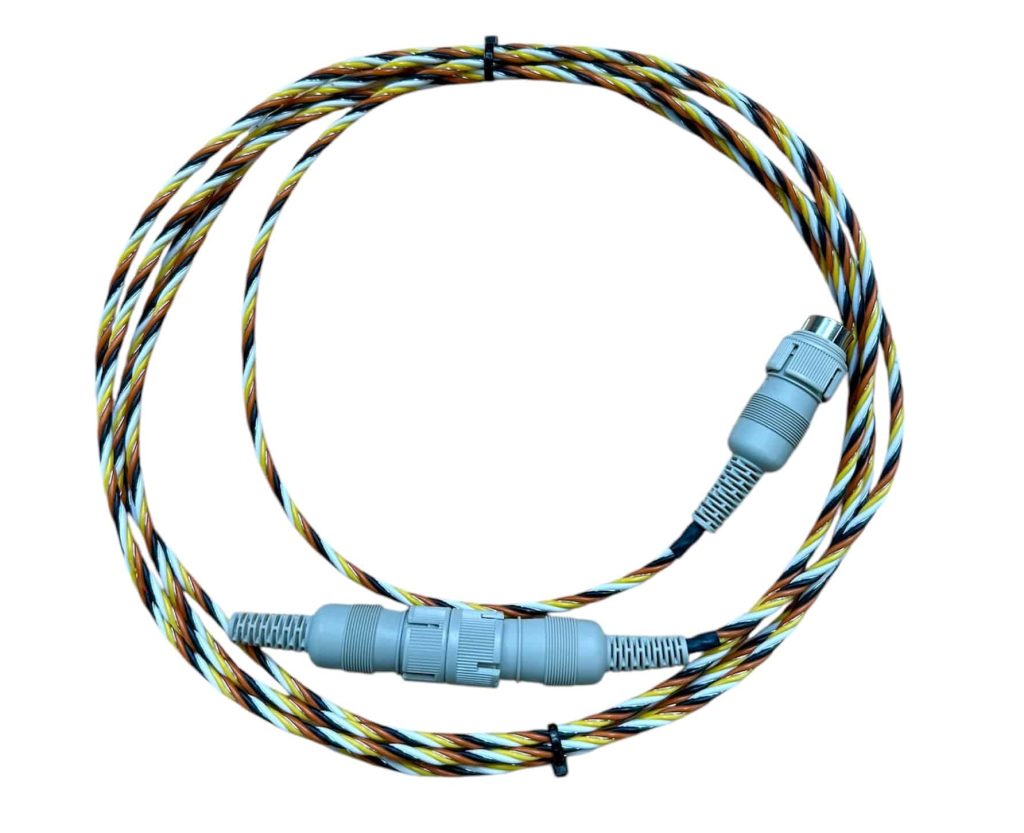
Leak detection cable provides continuous monitoring along its entire length.
It is particularly suitable for:
- Raised floors
- Room perimeters
- Chilled water pipework
- CRAC/CRAH units
- Plant rooms
- Large floor areas
The major advantage is coverage. Instead of protecting one point, the cable monitors an entire route.
4.2 Liquid Leak Sensors
Liquid leak sensors are better suited to specific risk points.
Typical applications include:
- CRAC drip trays
- Condensate trays
- Individual valves
- CDUs
- Manifolds
- Individual pieces of equipment

4.3 Distance Measuring Water Leak Detection
Distance measuring systems add another level of functionality.
Instead of simply identifying the affected zone, the system calculates the distance to the leak along the sensing cable.
This is particularly valuable in large data centres where hundreds or thousands of metres of cable may be installed.


5. Which System is Right for Your Data Centre?
The correct water leak detection system depends on the area being protected, the number of independent zones required, the length of sensing cable and whether the installation requires precise leak location.
| Application | Recommended solution |
| Small server room | LD2-3 One or Two zone water leak system |
| Small/medium data centre | LD2-3 or LD4-2 Zonal system |
| Multiple server rooms | LD8-2, LD32 or LD64-2 Multi-zone Water Leak System |
| Large data hall | DLD16 + DLD250 Distance Measuring System |
| Large raised-floor installation | DLD16 + DLD250 Distance Measuring System |
| CRAC drip tray | DTS Standalone drip tray sensor that connects to your BMS/Alarm PLC |
| Individual valve or pipe section | RWM Standalone sensor with water leak detection cable |
| Liquid cooling equipment | Liquid leak sensor |
| Long chilled-water routes | DLD250 Distance to Leak Sensor with up to 250m Leak detection cable / DLD16 |
The system should be designed around the physical layout rather than simply selecting the largest available panel.
6. The Most Popular Solution: LD2-3 Two-Zone Water Leak Alarm


For smaller server rooms and many small-to-medium data-centre applications, the LD2-3 Two Zone Water Leak Alarm provides a straightforward two-zone monitoring solution.
Each zone can monitor leak detection cable or suitable liquid sensors, allowing different areas of the facility to be independently monitored.
The system provides:
- Two independent detection zones
- Audible and visual alarm indication
- LCD status display
- Cable fault monitoring
- Adjustable zone sensitivity
- Volt-free relay outputs
- Optional remote alarm indication
- Optional Modbus TCP communication
Cable Fault Monitoring
The system continuously monitors the integrity of the detection circuit.
This means a disconnected or damaged sensing cable can be reported as a fault rather than leaving an area unprotected without the operator knowing.
This is particularly important beneath raised floors, where visual inspection of the cable may be difficult.
Adjustable Sensitivity
Different environments can require different detection thresholds.
Humidity, contamination and the conductivity of local water can affect the electrical characteristics of a sensing system.
Independent zone sensitivity adjustment allows the installer to optimise each zone during commissioning.
Sensitivity can be reduced where environmental conditions could otherwise create nuisance alarms, or increased where earlier detection of lower-conductivity water is required.
For more information, see: Internal link: Why Water Leak Detection Equipment Needs Adjustable Sensitivity
7. Why Shut-Off Valves Are Not Normally Used in Data Centres
In many commercial buildings, a water leak detection system may automatically isolate the incoming water supply using a motorised shut-off valve. Data centres are different.
Cooling water is essential for maintaining safe operating temperatures within servers, CRAC units and chilled water systems. Automatically shutting off the cooling water during a leak could rapidly lead to overheating, resulting in equipment shutdown, service interruption and potentially greater financial losses than the leak itself.
Instead, most data centre leak detection systems are designed to provide immediate alarm notification so that facilities engineers can investigate and isolate the problem safely while maintaining cooling to critical infrastructure wherever possible.

8. Installing WDC4 Leak Detection Cable
A common installation for a small server room uses a two-zone configuration.
Zone 1 monitors the perimeter of the server room using CMR Electrical’s WDC4 leak detection cable. This detection cable is manufactured in the UK to the required length that you need. It comes pre-fitted with the correct connectors and terminal plug so you don’t need to cut it on site.
Zone 2 protects the area directly beneath the server racks. Here the sensing cable is installed beneath the raised access floor in a serpentine pattern, ensuring continuous coverage beneath the equipment where cooling pipework and liquid cooling systems present the greatest risk.
9. Best practices for using Water Leak Detection Cable
Correct installation is just as important as selecting the right water leak detection system. Even the most advanced alarm panel cannot provide reliable protection if the leak detection cable is installed incorrectly.
The following best practices have been developed from years of practical experience installing leak detection systems in server rooms, plant rooms and data centres.
CMR Electrical installation experience
Practical experience matters when designing a leak detection system. Cable length, cable routing, floor construction, equipment layout and the location of potential water sources all affect the final system design. CMR Electrical has supplied water leak detection systems for server rooms, data centres, plant rooms and other critical environments, allowing system designs to be based on the practical requirements of the installation rather than simply selecting equipment from a catalogue.
“What we have learned from data centre leak detection installations”
- Don’t design cable lengths from room dimensions alone.
- Don’t leave large cable coils beneath raised floors.
- Consider maintenance access before deciding the cable route.
- Divide large areas into logical zones.
- Consider how the alarm will actually reach the facilities team.
Keep Water Leak Detection cable under 50m
For optimum performance, each length of WDC4 detection cable should not normally exceed 50 metres. Longer cable runs increase circuit resistance and can affect the accuracy of the monitoring electronics, while very long lengths are also more difficult to install without twisting or damaging the stainless-steel sensing wires.
Where a larger protected area is required, the preferred approach is to divide the installation into multiple detection zones. CMR Electrical offers 4-zone (LD4-2) and 8-zone Multizone Water Leak Detection System (LD8-2) that provide additional coverage while maintaining reliable operation.
Keep the Cable Flat
To maximise sensitivity, the sensing cable should be secured directly onto the subfloor using adhesive floor clips positioned approximately every metre. Keeping the cable flat against the floor allows even a small amount of water to bridge the sensing wires, providing the earliest possible warning of a developing leak. If the cable is suspended above the floor, significantly more water is required before detection occurs.

Avoid Conductive Surfaces
Avoid direct contact between the sensing cable and conductive surfaces. Metal floor pedestals and other conductive objects can potentially affect the sensing circuit if the detection cable comes into contact with them. The cable should therefore be secured so that it remains isolated from conductive surfaces. To avoid this, you can upgrade the cable to have a braided sleeve. This allows water to be absorbed inside and touch the sensor wires. It also creates a barrier that stops the sensor wires touching conductive surfaces.
Install Beneath Server Racks Using a Serpentine Pattern
When protecting the area beneath server racks, the sensing cable should be installed in a serpentine pattern rather than in straight lines. This provides continuous coverage across the protected area while minimising the total cable length required.
As a general guide, loops of approximately 300 mm in diameter can provide good average beneath raised access floors while keeping the cable layout manageable.
Although WDC4 leak detection cable is highly flexible, it should never be bent sharply or forced around tight corners. Tight bends can distort the cable and increase the risk of the two stainless steel sensing wires touching each other, potentially resulting in nuisance alarms.
Similarly, avoid crossing or twisting the cable over itself during installation. A neat cable layout not only improves reliability but also makes future inspection and maintenance much easier.

Do Not Leave Large Coils of Spare Cable
Excess detection cable should not simply be coiled beneath the raised floor.
Large coils can collect:
- Dust
- Dirt
- Moisture
- Building debris
They can also become tangled with other services and make future maintenance more difficult. If the specified cable length is incorrect, contact CMR Electrical for advice on the appropriate solution. Do not cut or modify the sensing cable on site.
10. Common Installation Mistakes
| Common Mistake | Better Practice |
| Excess cable coiled beneath the floor | Measure the area you require leak detection and specify the correct cable length |
| Cable lifted from the floor / trip hazard | Use floor adhesive clips to keep cable flat |
| Tight bends in detection cable results in cable fault | Use generous loops of approximately 30cm in diameter |
| Clips spaced too far apart | Place clips every 1 m apart. Helps keep detection cable flat |
| Order excessively long detection cable for zonal leak detection system | Split the large area / room into seperate rooms |
| No commissioing test | Test every detection zone before handover to confirm correct operation. |
| Poor zone labelling | Clearly lable where each zone is next to the Alarm Panel |
| Detection cable touching conductive surfaces giving false alarms | Choose braided detection cable or replace cable away from metal surfaces |
Good cable management is particularly important in data centres because contractors may repeatedly access the space beneath raised floors.
11. DLD16 Distance Measuring Water Leak Detection
For larger data centres, simply knowing that a leak has occurred may not be enough. Consider a data hall containing hundreds of metres of sensing cable beneath a raised floor. A conventional zonal system can tell engineers which zone contains water, but the affected zone could still cover a large area that needs to be inspected. Engineers may need to lift floor panels and physically trace the detection cable until they find the wet section. This can take considerable time.
The DLD16 Distance Measuring Water Leak Detection System addresses this problem by identifying the location of the leak along the detection cable. Each DLD250 monitors up to 250 metres of WDC4 detection cable connected to it and calculates the distance to the leak along that cable. It does not measure the physical distance between DLD250 modules; instead, each DLD250 independently monitors its connected section of detection cable.

How the DLD16 Distance to Leak System Works
The DLD16 communicates with DLD250 sensing modules installed throughout the facility. Each DLD250 can monitor up to 250 metres of WDC4 leak detection cable and identify the position of a leak to an accuracy of +/- 1 metre.
When water is detected, the system identifies:
- The affected zone
- The DLD250 sensing module
- The distance to the leak along the sensing cable
A single DLD16 can support up to 16 DLD250 sensing modules. With each DLD250 monitoring up to 250 metres of WDC4 detection cable, this provides a potential total sensing capacity of up to 4,000 metres.
| Feature | LD2-3 Zonal System | DLD16 Distance Measuring System |
| Detects water leaks | ✓ | ✓ |
| Indicates the affected zone | ✓ | ✓ |
| Displays the leak location to ±1 m accuracy | ✗ | ✓ |
| Maximum leak detection cable | 50 m per zone | 250 m per DLD250 sensor |
| Ideal application | Server rooms and small data centres | Large or multi-floor data centres |
| Locating a leak | Manual inspection | Distance displayed automatically |
| Typical installation | Single room | Multiple rooms, data halls or buildings |
The DLD250 sensing modules communicate with the DLD16 using a CAT6 daisy-chain network. As the communication network becomes longer, voltage and signal losses need to be considered. For very large installations, CMR Electrical recommends DLD Booster modules approximately every 1,000 metres of communication network. The booster regenerates the communication signal and power supply to maintain reliable communication with remote sensing modules. This allows large leak detection networks to be expanded without compromising communication reliability.
12. BMS Water Leak Detection for Data Centres
A modern data centre water leak detection system should do more than simply activate a local alarm. In critical environments where server rooms may be unmanned, secured or located away from occupied areas, it is essential that leak events are communicated immediately to the engineers responsible for maintaining the facility.
Integrating the leak detection system with the Building Management System (BMS) provides centralised monitoring of water leaks, cable faults and system alarms. This allows facilities teams to receive immediate notification of potential problems and take action before water reaches critical IT equipment.
Why BMS Integration Is Important in Data Centres
Data centres operate continuously, and even a small leak can quickly develop into a significant incident if it is not detected and investigated. Server rooms are often located in restricted-access areas, basements or dedicated technical spaces where there may be no personnel present to hear a local alarm.
By connecting the leak detection system to the building’s BMS, alarms can be displayed alongside other critical building information, including:
- Cooling system alarms
- Temperature and humidity monitoring
- Power system status
- Fire protection systems
- Security notifications
This gives operators a complete overview of the facility and allows them to respond quickly when a leak occurs.
How Water Leak Detection Systems Connect to a BMS
CMR Electrical water leak detection systems provide several methods for integration depending on the requirements of the installation.
Volt-Free Relay Contacts
The simplest and most common method of BMS water leak detection integration is through volt-free (dry) relay outputs. The leak detection panel provides relay contacts that can communicate important alarm information to the BMS or alarm PLC, including:
- Common leak alarm
- Individual zone alarms
- Cable fault conditions
- System faults
For example, if a WDC4 leak detection cable installed beneath a raised floor becomes wet, the alarm panel identifies the affected zone and immediately sends the alarm condition to the BMS. Similarly, if the detection cable becomes disconnected, damaged or tampered with, the system can report a cable fault before a leak occurs. This additional level of monitoring is particularly important in secure data centre environments where regular visual inspection of the sensing cable may not be practical.
Modbus TCP Integration for Advanced Monitoring
For larger and more complex data centres, Modbus TCP provides a more advanced method of integrating leak detection into the building management infrastructure. Using Modbus TCP communication, detailed information from the leak detection system can be transferred directly to the BMS, allowing operators to monitor:
- Individual detection zones
- Alarm status
- Cable faults
- Sensor conditions
- System health information
This is particularly useful for installations using multiple leak detection panels, such as LD4-2, LD8-2, LD32, LD64-2 or DLD16 systems, where large areas of the facility may require monitoring from a central control platform.
Internal link: How to harness Modbus for advanced leak detection in large buildings
13. Standalone Leak Sensors for Localised Protection
Although continuous leak detection cable provides the most comprehensive protection for large areas, some applications only require monitoring at a single location. In these situations, standalone liquid leak sensors offer a simple and cost-effective alternative.
One example is CMR Electrical’s Drip Tray Sensor (DTS). Designed specifically for monitoring drip trays, air conditioning units and other small areas where water is expected to collect first, the DTS provides reliable leak detection without the need to install continuous sensing cable. Typical applications include CRAC and CRAH unit condensate trays, fan coil units, air handling units and mechanical plant.
Typical applications include:
- CRAC drip trays
- CRAH units
- Fan coil units
- Air handling equipment
- Mechanical plant

For applications where a short length of sensing cable is preferred, the RWM (Remote Water Monitor) combines a compact monitoring unit with leak detection cable. This makes it ideal for protecting areas such as small pipe runs, individual valves, manifolds, water meters or isolated sections of plant where installing a complete leak detection panel would not be practical.
Typical applications include:
- Individual pipe runs
- Valves
- Manifolds
- Water meters
- Small plant areas

14. Testing and Maintaining a Data Centre Leak Detection System
The recommended maintenance schedule should be determined by the facility’s risk assessment operating procedures and the manufacturer’s recommendations. The following provides an example maintenance regime for a data centre leak detection system.
A data centre water leak detection system is designed to provide continuous protection, often operating for many years without interruption. However, like any critical building protection system, regular inspection and testing are essential to ensure reliable operation.
A well-maintained leak detection system helps prevent nuisance alarms, confirms communication with the Building Management System (BMS) and ensures that engineers can respond quickly when a genuine leak occurs.
Monthly Visual Inspection
A monthly visual inspection should be carried out by facilities personnel to confirm that the leak detection system remains in good condition.
The inspection should include:
- Checking that the leak detection panel shows normal operation.
- Confirming that there are no active alarms or fault indications.
- Checking that remote alarm indicators, such as beacons or sounders, are unobstructed.
- Inspecting visible sections of leak detection cable for damage.
- Checking that floor tiles, equipment or maintenance activities have not disturbed the sensing cable.
This is particularly important in data centres where contractors or maintenance teams may regularly access areas beneath raised floors.
Quarterly Functional Testing
A more detailed functional test should typically be carried out every three months, subject to the facility’s own maintenance requirements.
Testing should include:
- Each detection zone
- Leak detection cable
- Liquid leak sensors
- Audible alarms
- Visual alarms
- Cable fault monitoring
- BMS communication
- Remote notification
For DLD16 installations, individual DLD250 modules should also be checked.

Inspecting Detection Cable
Look for:
- Physical damage
- Missing clips
- Cable displacement
- Tight bends
- Crushing
- Contamination
- Contact with conductive surfaces
If the cable has been disturbed, it should be repositioned and tested before the area is returned to normal operation.
Cleaning
Dust and contaminants can accumulate on the sensing cable, particularly beneath raised floors.
Dust and contaminants can accumulate on sensing cable, particularly beneath raised access floors. Where cleaning is required, follow the cable manufacturer’s instructions.
For CMR Electrical’s WDC4 cable, use the following procedure:
- Carefully remove the cable from the adhesive floor clips. Avoid pulling the cable too hard, as this can damage the sensing wires.
- Wipe the entire length of the cable with a clean, damp cloth to remove dust and contamination.
- Allow the cable to dry fully for at least 20 minutes.
- Reinstall the cable in its original position, ensuring it lies flat against the floor. Secure it using the adhesive clips.
- Test the detection zone to confirm that the alarm panel correctly detects a leak.
Avoid aggressive cleaning chemicals, such as bleach, which could damage the cable.

Testing BMS Integration
The BMS connection should be tested as part of the maintenance programme.
Confirm that:
- Leak alarms are received.
- Cable faults are reported.
- Zone identification is correct.
- Alarm messages appear correctly.
- Remote notifications operate correctly.
A system that detects water but fails to communicate the alarm provides only partial protection.
Record Keeping
All inspections and tests should be recorded as part of the facility maintenance schedule.
Records should include:
- Date of inspection.
- Engineer responsible.
- Zones tested.
- Results of alarm tests.
- Any faults identified.
- Corrective actions completed.
Maintaining accurate records helps demonstrate that the leak detection system is operational and provides valuable information when planning future upgrades or expansions.
15. Frequently Asked Questions
Do data centres need water leak detection?
Water leak detection should be considered an important part of protecting critical data-centre infrastructure. Cooling systems, chilled water pipework, condensate systems and liquid cooling equipment all create potential leak points. Raised access floors can also allow water to spread unnoticed. A dedicated detection system provides continuous monitoring and early warning.
Where should leak detection cable be installed?
Common locations include:
- Beneath raised access floors
- Around server racks
- Around CRAC and CRAH units
- Along chilled water pipework
- Around valves and joints
- Around plant equipment
- Along room perimeters
- Around service penetrations
The final layout should be based on the actual risk assessment and building design.
Can leak detection integrate with a BMS?
Yes. CMR Electrical systems can provide integration using volt-free relay contacts, while compatible systems can also provide Modbus TCP communication. This allows leak and fault information to be communicated to the building’s monitoring infrastructure.
What is the maximum length of leak detection cable?
For standard CMR Electrical zonal systems, WDC4 cable should normally be limited to 50 metres per zone. For the DLD16 system, each DLD250 can monitor up to 250 metres of WDC4 cable, with up to 16 DLD250 modules connected to one DLD16.
Should water leak detection automatically shut off cooling water?
Not normally. Automatically isolating cooling water could remove cooling from critical IT equipment. The appropriate response depends on the cooling system and the consequences of isolation. In many data-centre applications, early warning and rapid engineering intervention are preferable.
What is the difference between leak detection cable and a spot sensor?
Leak detection cable provides continuous monitoring along its length.
It is ideal for:
- Raised floors
- Pipe routes
- Room perimeters
- Large areas
Spot sensors monitor a specific location.
They are ideal for:
- Drip trays
- Individual valves
- CDUs
- Equipment
- Condensate collection points
Many data centres use both.
Can leak detection cable be reused?
Some sensing cable can be reused after a water alarm, provided it has been inspected, cleaned, dried and confirmed to be electrically sound. Follow the cable manufacturer’s instructions before returning it to service. Cable that has been physically damaged, contaminated or otherwise compromised should be replaced.
Can one panel monitor multiple server rooms?
Yes. The appropriate system depends on the number of areas requiring independent monitoring.
CMR Electrical’s range includes:
- LD2-3 – two zones
- LD4-2 – four zones
- LD8-2 – eight zones
- LD32 – larger multi-zone applications
- LD64-2 – up to 64 zones
- DLD16 – distance measuring applications
How often should a data centre leak detection system be tested?
A visual inspection should be carried out regularly, with a more detailed functional test typically performed every three months.
The exact maintenance interval should reflect the facility’s risk assessment, operational requirements and maintenance procedures.
Conclusion.
Data centre water leak detection should be designed around the physical layout of the facility, the sources of water present and the consequences of a leak.
Smaller server rooms may only require a two-zone leak detection system, while larger data halls and multi-floor facilities may benefit from distance-measuring technology capable of identifying the location of a leak along hundreds or thousands of metres of detection cable.
CMR Electrical manufactures a range of water leak detection systems in the UK, including zonal alarm panels, WDC4 sensing cable, standalone leak sensors and DLD16 distance-measuring systems.
If you are designing a water leak detection system for a data centre, contact CMR Electrical for advice on panel selection, cable lengths, zoning and BMS integration.